 Clint Lawing
Capitalize on Shorter, Closer Getaways
Fall travel has pivoted. Summer is your traditional week-long vacation with the whole family, but with busy schedules at home and economic pressure, fall has become a season of short trips.
When budgets tighten, visitors don’t eliminate travel; they adapt. Instead of taking a multi-week trip with expensive flights, travelers look for shorter, regional drive-market escapes.
More importantly, how people choose where to go has fundamentally changed.
As data from Skift Research shows, the traditional booking flow has flipped. The old playbook assumed travelers picked a destination first, booked travel and lodging, and figured out what to do once they arrived. Today, experiences are the initial trigger. Visitors research specific activities and happenings first, and that experience dictates where they choose to go.
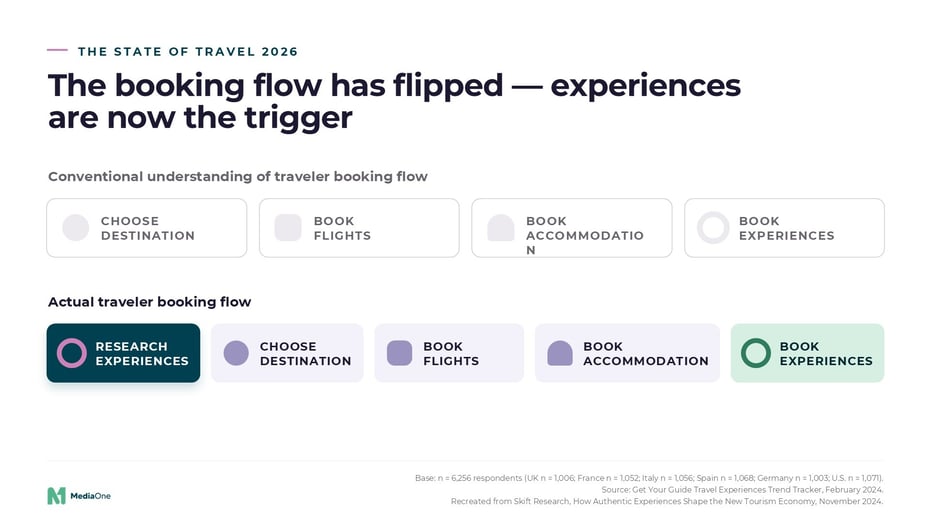
This gives us a clear opportunity to align our media strategy with how visitors actually plan, helping boost the shoulder season by leading directly with experiences rather than generic destination branding.
What the Data Says: Cutting Distance, Not Experience
Now let’s look at some data that backs up what we are saying.
- Drive-Market and Weekend Dominance: Seasonal research from Vacasa shows that 85% of autumn travelers choose weekend getaways (70% quick weekend, 67% long weekend), with 76% driving to their destination. https://www.vacasa.com/discover/fall-travel-trends
- Price as the Primary Filter: In that same Vacasa fall survey, 71% of fall travelers cited overall price and value as their top deciding factor when selecting accommodations and locations. https://www.vacasa.com/discover/fall-travel-trends
- Macroeconomic Shift to Drive Markets: According to the U.S. Travel Association’s 2026 Travel Forecast, while domestic leisure spending remains resilient, travelers are actively adjusting behavior by shifting toward shorter-duration, lower-cost regional drive trips to stretch their discretionary dollars. https://www.ustravel.org/research/travel-forecasts
- Controlled Spend Per Trip: Consumer tracking from Fullstory confirms that economic pressure is forcing travelers to evaluate cost per trip far more aggressively, choosing regional destinations where transit and lodging costs stay predictable. With 20% switching to alternative travel options (driving vs. flying), 77% say the most important factor influencing their travel is price and value. https://www.fullstory.com/fullstory-releases-travel-and-hospitality-survey-findings/
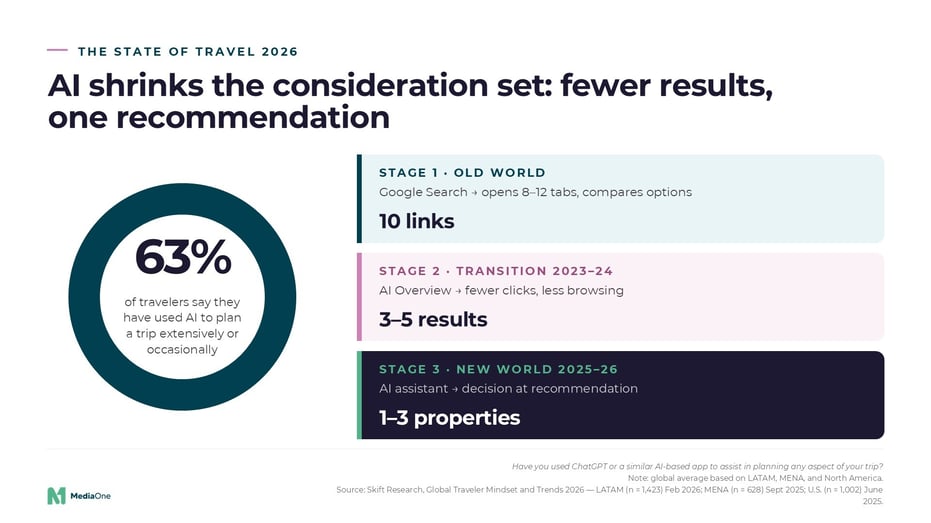
- AI Shrinks the Consideration Set (Less Time to Win): Research from Skift shows that 63% of travelers now use AI to plan trips. In the past, visitors opened 8 to 12 tabs and compared 10 different links. Today, AI assistants serve up just 1 to 3 direct options, and travelers make decisions immediately. You no longer have weeks of passive browsing to slowly convince someone; your window to get into the consideration set is tighter than ever. https://research.skift.com/reports/global-traveler-mindset-and-trends-2026/
The Strategic Media Playbook for DMOs
1. Target With Strategy
With people looking for lower-cost 48-hour escapes, they are not looking to drive 7 hours in a car. Broad targeting of large areas will just waste your budget on audiences who will not convert.
- Own the Drive Market: Concentrate spend on key drive feeder markets, matching it with your visitor profile.
- Use Polygons: Don’t just plug in a radius; use polygons based on drive time, recognizing that interstate travel is very different from back roads.
- Tailor the Messaging: Match your destination's unique attractions to potential visitors. People interested in outdoor rec? Don’t show them downtown shopping; show a lake, a climbing wall, etc.
2. Move creative from Awareness to Actionable
The conversion barrier for short travel is not interest; it’s perceived effort. Can I take this trip without breaking the bank?
- Frame Content Around Time and Value: Switch from generic brand campaigns and focus on bite-sized itineraries. “Your 2-Day October Escape Plan” or “Your Budget-Friendly Fall Weekend”
- Highlight Low-Cost Local Assets: Focus on free or lower-cost events. Show off your lookouts, hiking trails, harvest festivals, and walkable main streets
- Inject Urgency: Use seasonal events to create a sense of urgency. “The leaves will fall and fade, but your photos will not.” or “Take a breather before the holiday rush”
3. Budget Based On Events and Attractions
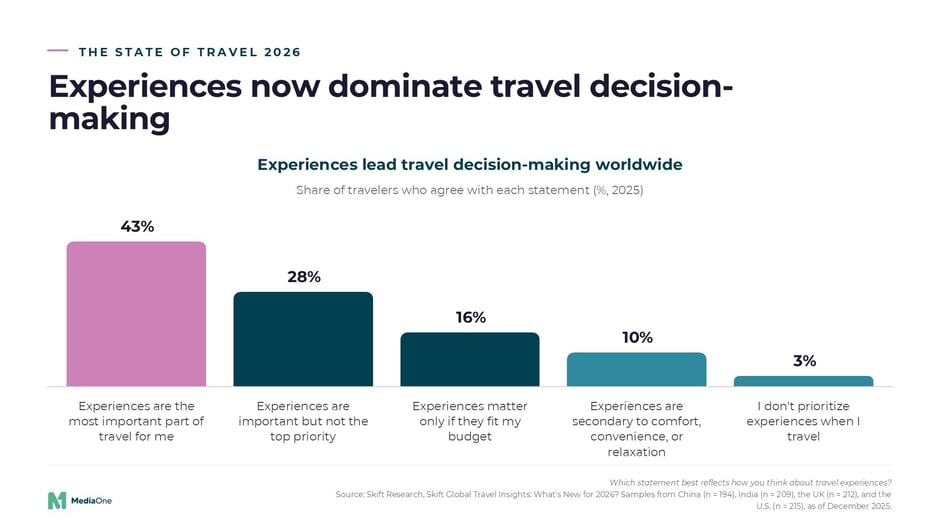
Data from Skift Research’s State of Travel 2026 confirms that 43% of travelers rank experiences as the single most important part of their trip, with another 28% calling them a top priority. When budgets are tight, people aren't traveling just to "get away." They are packing up the car for a specific reason.
-
Focus Spend on Real Experiences: Stop spending your entire budget on broad destination awareness. Put real dollars behind specific local draws like harvest festivals, peak leaf windows, craft brewery tours, and fall trail runs.
-
Balance Evergreen and Event Flights: Keep a steady baseline running in your core drive markets, but hold 20% to 30% of your seasonal budget in reserve to push hard right before major local events create natural urgency.
4. Retarget Your Summer Audience
People who just visited in late spring and summer should be your highest-converting audience.
- Precision Retargeting. Build creative based on what content they viewed previously.
- See Us In A New Season: Show how your destination changes in the autumn and position the trip as an easy and familiar escape.
The Bottom Line
.png?width=940&height=400&name=image%20(3).png)
As Expedia’s Path to Travel Purchase data illustrates, 59% of travelers start their research without a specific destination in mind, and ad receptivity peaks at 81% early in the consideration cycle. Even for quick weekend getaways, travelers browse over 140 pages of content across a 45-day planning window before booking.
You don’t need massive national awareness budgets to win fall drive-market travel in a tight economy. Economic pressure is reshaping the trip, while experiences are determining which nearby destination wins out. Winning shoulder-season travel comes down to a clear framework:
Proximity X Experience X Value X Urgency
-
Proximity: Can I reasonably drive there? Focus spend on core 2–4 hour drive-time feeders to keep travel friction low.
-
Experience (The Hero): Is there something worth going there for? Lead with standout local anchors–fall foliage, harvest festivals, and outdoor recreation–to give travelers a reason to choose you.
-
Value: Can I make the weekend affordable? Simplify planning with actionable, budget-conscious 48-hour itineraries and free local attractions.
-
Urgency: Why should I go now rather than someday? Use fleeting seasonal windows and event dates to convert passive consideration into immediate action. By making the experience the hero and removing friction around drive time and cost, you can turn the fall shoulder season into a major economic win for your local community.
Ready to optimize your DMO’s seasonal media strategy? The digital performance team at MediaOne builds high-converting, data-driven drive campaigns tailored to your feeder markets. Let's connect and refine your fall media plan.
FAQs
Q: Why are travelers leaning so heavily into 2 to 4 hour micro-cations this fall? Tight home budgets and unpredictable gas prices aren't stopping people from taking a break. They're just adapting. Swapping expensive long-haul flights for quick drive trips cuts out the biggest cost variables while still delivering that needed weekend refresh.
Q: What is the single biggest driver for fall travelers right now? Price and overall value. Over 70% of autumn travelers say value is their top deciding factor, with 85% choosing quick weekend trips and 76% driving to get there.
Q: How should DMOs shift their targeting and creative strategy?
- Targeting: Ditch the broad radius maps and use drive-time polygons to focus spend strictly on core 2 to 4 hour markets.
- Creative: Swap generic brand awareness ads for actionable, budget-friendly 48-hour itineraries that showcase low-cost local spots like trails, harvest festivals, and walkable main streets.
Q: Who is our highest-converting audience for shoulder-season campaigns? Your summer visitors. People who were on your site or in your destination during late spring and summer are your lowest-hanging fruit. Use "See Us in a New Season" messaging to show how your destination transforms in the autumn and invite them back for an easy, familiar escape.